Search Updates: Reddit Reviews, Google’s November Core Update, and Businesses in ChatGPT
What Reddit Reviews, Google’s November core update, and Businesses in ChatGPT mean for marketers, with practical advice on visibility, brand strategy, and revenue.
 Jonathan Berthold8 min read
To say Q4 has been busy for search headlines is an understatement. From poisoned SERPs to core updates, a lot is happening in search & marketing.
However, every one of these headlines comes back to the same question for me: will it help the business make money, or will it just make noise? Here are three updates that have piqued my interest over the last week, and where I’d actually put the effort.
1. Reddit Reviews: start by listening to what customers are telling you
Reddit announced Reddit Reviews on November 10, a new digital experience that will create product reviews and highlights from community insights. Reddit Reviews is slated to roll out over the next few weeks to users in the United States, making it a timely opportunity for brands selling nationwide during the Black Friday & Cyber Monday sales blitz.
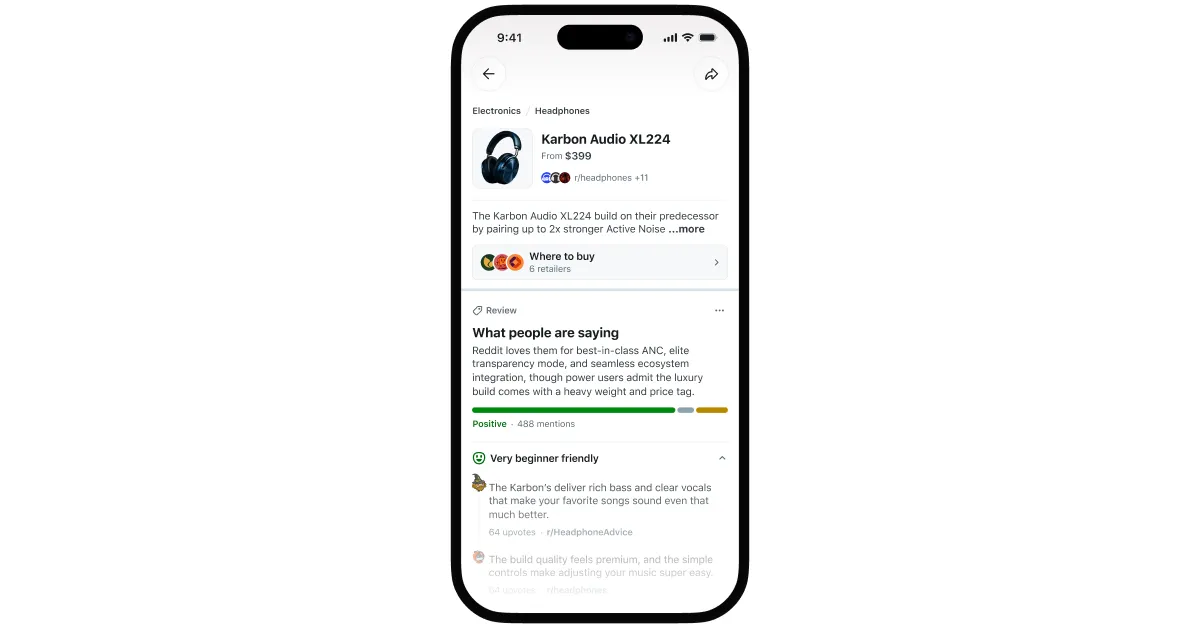
Worried about negative product reviews and want to pay your way to the top? Fortunately (or unfortunately, for black-hat marketers), Reddit Reviews will not be a pay-to-play environment, meaning your business will be at the mercy of the platform. Reddit’s internal AI mechanisms will organize consumer opinions, identify themes, and create experiences for specific product categories at launch to surface the best recommendations possible.
What does this mean for me? If your brand is heavily discussed on Reddit, you may not have much to do in the short term. However, as with traditional brand marketing, you can use strategies to leverage Reddit’s power in certain niches.
- Understand customer feedback. Don’t let negative product reviews and sentiment run rampant. If users are identifying issues with your products, adding more fuel to the fire from a marketing perspective will only lead to more users discovering those issues.
- Think twice before joining conversations. No one likes having outsiders spy on their conversations, and this sentiment largely holds on Reddit. If you’re a brand owner, be very careful and don’t be loud about your brand on Reddit. No one likes a self-promoter, and even less so people who try to tell others their opinions are wrong. Please resist the urge to debate with customers who may have had an unsatisfying experience with your brand.
Reddit is one of those channels where investing in a marketing strategy seems to become more complicated by the day. You want your brand evangelists to shout from the rooftops, but you also want to stay inconspicuous when you venture through the Reddit universe.
2. Google’s November core update: don’t torch the website just yet
Google’s November core update started rolling out on November 10. As of this writing, it’s still rolling out, so anyone telling you exactly what changed is guessing. Confidently, maybe. But guessing nevertheless.
The timing couldn’t be much worse for merchants (well, maybe if it happened ON Black Friday, but this is pretty close). Ecommerce operators worldwide are rushing to ensure inventory levels are sufficient, creatives are ripping on Meta, and new funnels are launching without a hitch. The last thing anyone in the ecommerce realm needs right now is the fear that potentially lucrative traffic could drop to near-zero because of yet another algorithm update from our Google overlords.
Whenever traffic dips during and around a Google update, it becomes tempting to blame the technological boogeyman. However, a revenue decline alone doesn’t prove an algorithm update has hit your website. If you start to see revenue declining from organic search during this season, there are a few ways to be proactive:
Is it traffic or is it conversion? Start by looking at how traffic, rankings, conversion rate, and revenue changed after the update. If organic revenue fell while traffic held steady, Google probably isn’t your villain. Look at your conversion rate on key money pages, your overall traffic mix, drop-offs in the funnel, average order value, etc.
What if everything dropped? If rankings, traffic, and revenue all decline at the same time, it’s important to drill down into the details:
- Start with the pages that lost traffic. Analyze pages that lost traffic after the algorithm update. Do you see a similar loss in traffic from other channels, such as direct?
- Analyze traffic by intent. Are you losing traffic from keywords more likely to drive revenue, or from informational keywords that never really contributed to your bottom line?
- Sneak a peek at your competitors' organic situation. If many of your pages are falling for critical keywords, identify the winners in this update and see whether any trends emerge. Are your competitors getting a leg up, or have they, too, succumbed to Google's will?
- Check whether the results themselves changed. Google may be showing more forums, videos, or a different type of commercial page for the same query. If so, you may need to pivot long-term.
The last thing you need to do after an algorithm update passes is panic. You can end up doing more harm to your website’s organic traffic by making wholesale changes because of a few keywords dropping off the map. Also, be wary of agencies pitching “algorithm recovery” services; more often than not, these sales tactics are rooted in the same philosophy as the Man in Black from The Dark Tower Series…
What I’d do: monitor the rollout, fix confirmed problems, and save any major website changes for after the holiday rush.
3. Businesses in ChatGPT: a new way to track your AI visibility…maybe?
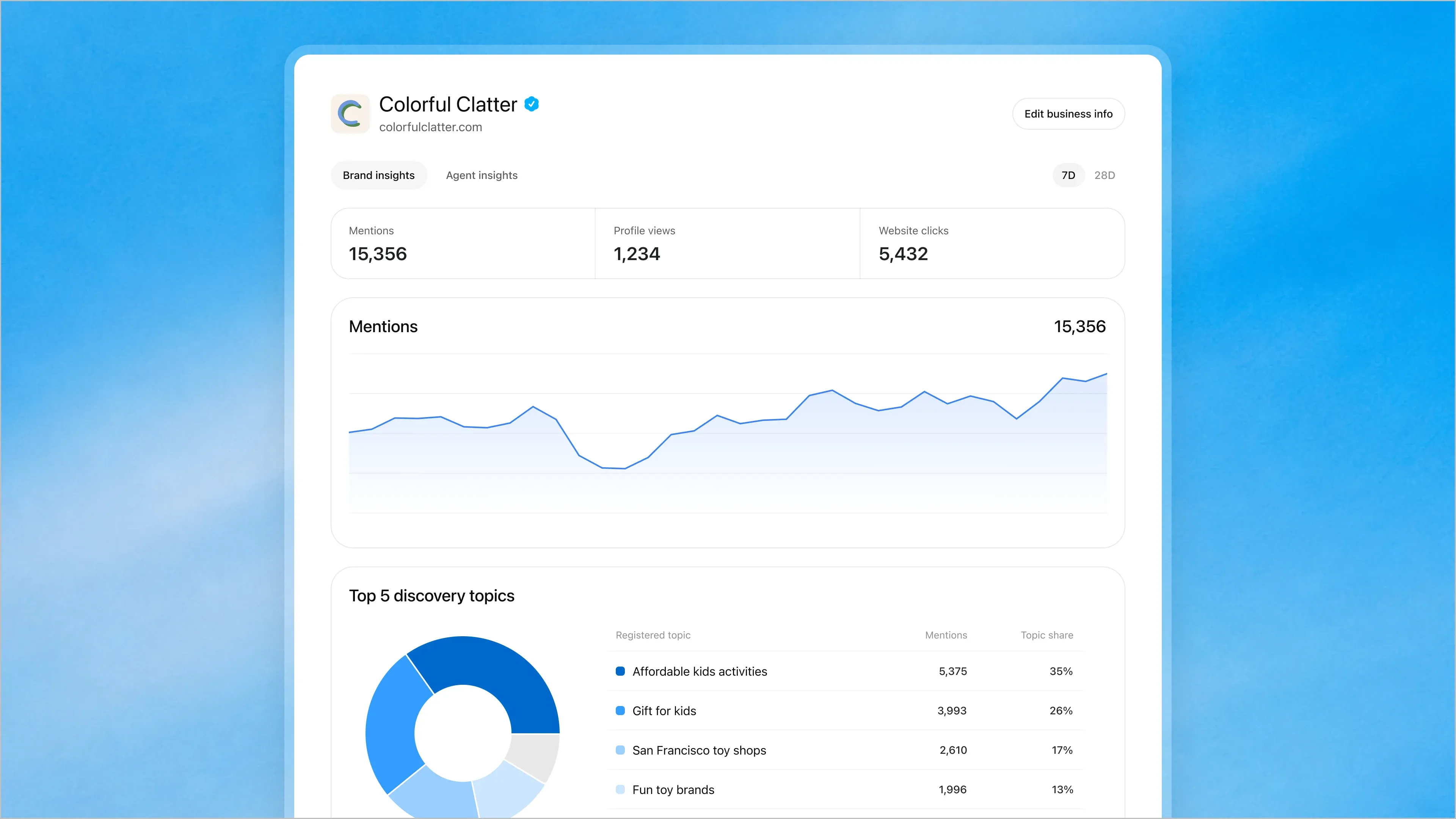
On November 10, OpenAI introduced Businesses in ChatGPT. This new beta lets eligible companies claim business profiles through Business Hub to update business information, supply product feeds, and access new insights into how visible their brand is on ChatGPT. Additionally, eligible ecommerce and online service businesses in the United States can publish separately labelled Business Agents to answer customer questions, creating a marketing opportunity to generate revenue through the ChatGPT ecosystem.
Initial reporting is limited, as businesses can access mention data only when it references their website, so brand-name or brand-term tracking is limited. Additionally, prompts are catalogued by topic, providing a holistic view rather than a detailed view of how users see their brand.
What this means for marketers
SEO professionals who have come to rely on Google Search Console and Bing Webmaster Tools have long sought the same visibility into a brand’s performance on emerging LLMs. Right now, the only way to understand how your brand shows up on platforms like ChatGPT, Claude, AI Mode, and others is to run prompt tracking via the many providers out there, or build your own tools. While that’s a cost-efficient way to get essential data, it’s only directional and doesn't reflect what users see in real time on their own personalized accounts.
With ChatGPT opening the curtain and sharing first-party data (aggregated over the past 28 days), brands could save money on prompt tracking and use ChatGPT’s own data for analysis. However, as with traditional rank trackers vs. Search Console data discussions, most of the value of independent tooling comes from competitive research, identifying trends, and more that’s often not available with brand-focused data.
At the end of the day, prompt tracking and citation analysis remain valid. You will still need to investigate the commercially relevant questions where your brand doesn’t appear, which competitors get recommended, and which third-party sources keep showing up. And unfortunately, ChatGPT doesn’t seem likely to hand over all of this data to marketers right now.
Some fun examples: I’m running a few GEO audits for businesses in the SaaS space, spanning both B2B and B2C. There are certain trends and insights that I would not have been able to identify if I relied on ChatGPT’s data:
- In one niche, affiliate-created Google Docs keep appearing in Perplexity’s citations.
- In Google’s ecosystem, YouTube has featured prominently, particularly in AI Overviews.
- In ChatGPT, I’ve observed brand-focused fan-out queries running rampant, indicating that ChatGPT likely knows which brands to recommend before pulling in information.
These are initial insights from a handful of audits, out of potentially millions of prompt-tracking dashboards currently running worldwide. From a brand marketing perspective, you can unpack many insights by running competitive audits on prompts where you don’t appear.
What should marketers do next?
- Claim your business on ChatGPT: Review your business descriptions, policies, and product data. OpenAI says claiming a business doesn’t guarantee greater visibility or control over independent recommendations, so don’t expect any magic to happen overnight.
- Keep analyzing relevant prompts and citations: Don’t stop analyzing prompts on different platforms. Instead, you can reduce auditing to once a week or every two weeks, especially if competitors in your niche aren’t pushing updates daily. Look for recommendation gaps, recurring product feedback, inaccurate information, and third-party sources or content creators becoming more influential in your category.
- Invest in where your audience is: The creator economy is large and continues to expand every day. To win the AI Search battle with other brands, make your brand the default recommendation for your target ICP across every platform they use. Invest in brand marketing and tap into the creator economy.
- Remember that revenue is still the main metric. AI visibility tracking provides valuable directional data. If your brand visibility increases on a tiny fraction of daily prompts, does that really move the needle? Make sure you’re tying revenue back to any initiative you launch, whether directly (paid) or indirectly (brand marketing)
The bottom line
Reddit, Google, and OpenAI all shipped new updates this week that will likely shift how search marketers view organic acquisition channels over the coming months. Ultimately, your overall brand marketing and SEO strategy should not materially change.